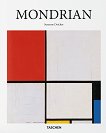
A key figure in the international avant-garde, Piet Mondrian (1872 - 1944) was at once an extraordinary painter and leading art theoretician whose influence resonates to this day. Coining the term "Neo-plasticism", he pursued a style of painting composed only of primary colors against a grid of black vertical and horizontal lines and a white base background. Mondrian's vision was that this essential painting would help to achieve a society in which art as such has no place, but rather exists for the total realization of "beauty". With stints in Amsterdam, Paris, London, and New York, Mondrian drew ... |
|
|
This stunning book is not only a sweeping document of Africa but an homage to the continent's history, people, and natural phenomena. ... Sebastiao Salgado is one the most respected photojournalists working today, his reputation forged by decades of dedication and powerful black-and-white images of dispossessed and distressed people taken in places where most wouldn't dare to go. Although he has photographed throughout South America and around the globe, his work most heavily concentrates on Africa, where he has shot more than 40 reportage works over a period of 30 years. From the Dinka tribes in Sudan and the ... |
|
|
A new edition of the classic and timely record of refugees and migrants on the move. ... It has been almost a generation since Sebastiao Salgado first published Exodus but the story it tells, of fraught human movement around the globe, has changed little in 16 years. The push and pull factors may shift, the nexus of conflict relocates from Rwanda to Syria, but the people who leave their homes tell the same tale: deprivation, hardship, and glimmers of hope, plotted along a journey of great psychological, as well as physical, toil. Salgado spent six years with migrant peoples, visiting more than 35 countries to document ... |
|
|
A good logo can glamorize just about anything. Now available in our popular Klotz format, this sweeping compendium gathers diverse brand markers from around the world to explore the irrepressible power of graphic representation. Organized into chapters by theme, the catalogue explores how text, image, and ideas distil into a logo across events, fashion, media, music, and retailers. Featuring work from both star names and lesser-known mavericks, this is an excellent reference for students and professionals in design and marketing, as well as for anyone interested in the visuals and philosophy behind brand identity. " ... |
|
|
Emerging amid the brutality of World War I, the revolutionary Dada movement took disgust with the establishment as its starting point. From 1916 until the mid-1920s, artists in Zurich, Cologne, Hanover, Paris, and New York launched a radical assault on the politics, social values, and cultural conformity which they regarded as complicit in the devastating conflict. Dada artists shared no distinct style but rather a common wish to upturn societal structures as much as artistic standards and to replace logic and reason with the absurd, chaotic, and unpredictable. Their practice encompassed experimental theater, games, ... |
|
|
"In Genesis, my camera allowed nature to speak to me. And it was my privilege to listen." Sebastiao Salgado On a very fortuitous day in 1970, 26-year-old Sebastiao Salgado held a camera for the first time. When he looked through the viewfinder, he experienced a revelation: suddenly life made sense. From that day onward - though it took years of hard work before he had the experience to earn his living as a photographer - the camera became his tool for interacting with the world. Salgado, who "always preferred the chiaroscuro palette of black-and-white images," shot very little color in his early ... |






















 Рейтинг: 9.00 / 1 глас



