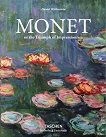
Master of the sublime: The essential Impressionist. ... No other artist, apart from J.M.W. Turner, tried as hard as Claude Monet (1840 - 1926) to capture light itself on canvas. Of all the Impressionists, it was the man Cezanne called "only an eye, but my God what an eye!" who stayed true to the principle of absolute fidelity to the visual sensation, painting directly from the object. It could be said that Monet reinvented the possibilities of color. Whether it was through his early interest in Japanese prints, his time as a conscript in the dazzling light of Algeria, or his personal acquaintance with the ... |
|
|
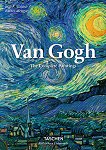
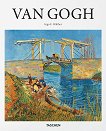
Vincent van Gogh's story is one of the most ironic in art history. Today, he is celebrated the world over as one of the most important painters of all time, recognized with sell-out shows, feted museums, and record prices of tens of millions of dollars at auction. Yet as he was painting the canvases that would subsequently become these sell-out modern masterpieces, van Gogh was battling not only the disinterest of his contemporary audiences but also devastating bouts of mental illness, with episodes of depression and paralyzing anxiety which would eventually claim his life in 1890, when he committed suicide shortly ... |
|
|
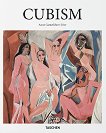
Pioneered by Picasso and Braque, Cubism has been described as the first avant-garde art movement of the 20th century. With inspiration from African and Native American art and sculpture, its practitioners deconstructed European conventions of viewpoint, form, perspective to create flattened, fragmented, and revolutionary images. Picasso's celebrated painting Les Demoiselles d'Avignon is typically regarded as the original cubist work, with its radical fracturing of objects and figures into distinct areas, corresponding to multiple different viewpoints. Cubism thereafter developed two distinct trends: Analytical ... |
|
|
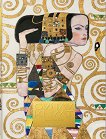
A century after his death, Viennese artist Gustav Klimt (1862 - 1918) still startles with his unabashed eroticism, dazzling surfaces, and artistic experimentation. This monograph gathers all of Klimt's major works alongside authoritative art historical commentary and privileged access to the artist's archive. With top quality illustration, including new photography of the celebrated Stoclet Frieze, the book follows Klimt through his prominent role in the Secessionist movement of 1897, his candid rendering of the female body, and his lustrous golden phase when gold leaf brought a shimmering tone and texture to ... |
|
|
Anguished art: The tortured talents of a post-Impressionist master. Today, the works of Vincent van Gogh (1853 - 1890) are among the most well-known and celebrated in the world. In Sunflowers, The Starry Night, Self-Portrait with Bandaged Ear, and many, many paintings and drawings beyond, we recognize an artist uniquely dexterous in the portrayal of mood and place through paint, pencil, charcoal, or chalk. Yet as he was deploying the lurid colors, emphatic brushwork, and contoured forms that would subsequently make his name and inspire generations of expressionist artists, van Gogh battled not only the disinterest of ... |
|
|
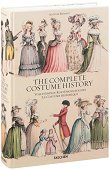
Изданието е триезично - на английски, немски и френски език. ... Originally published in France between 1876 and 1888, Auguste Racinet's Le Costume historique was in its day the most wide-ranging and incisive study of clothing ever attempted. Covering the world history of costume, dress, and style from antiquity through to the end of the 19th century, the six volume work remains completely unique in its scope and detail. This Taschen reprint presents Racinet's exquisitely precise color illustrations, as well as his delightful descriptions and often witty commentary. Spanning everything from ancient Etruscan ... |
|
|
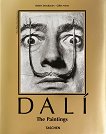
At the age of six, Salvador Dali (1904 - 1989) wanted to be a cook. At the age of seven, he wanted to be Napoleon. "Since then", he later said, "my ambition has steadily grown, and my megalomania with it. Now I want only to be Salvador Dali, I have no greater wish". Throughout his life, Dali was out to become Dali: that is, one of the most significant artists and eccentrics of the 20th century. This weighty volume is the most complete study of Dali's painted works ever published. After years of research, Robert Descharnes and Gilles Neret located painted works by the master that had been ... |
|
|
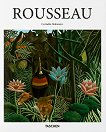
Henri Rousseau (1844 - 1910) was a clerk in the Paris customs service who dreamed of becoming a famous artist. At the age 49, he decided to give it a try. At first, Rousseau’s bright, bold paintings of jungles and exotic flora and fauna were dismissed as childish and simplistic, but his unique and tenacious style soon won acclaim. After 1886, he exhibited regularly at Paris’s prestigious Salon des Indépendants, and in 1908 he received a legendary banquet of honor, hosted by Picasso. Although best known for his tropical scenes, Rousseau, in fact, never left France, relying on books and magazines for inspiration, as ... |
|
|
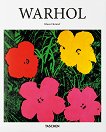
Andy Warhol (1928 - 1987) is hailed as the most important proponent of the Pop art movement. A critical and creative observer of American society, he explored key themes of consumerism, materialism, media, and celebrity. Drawing on contemporary advertisements, comic strips, consumer products, and Hollywood’s most famous faces, Warhol proposed a radical reevaluation of what constituted artistic subject matter. Through Warhol, a Campbell’s soup can and Coca Cola bottle became as worthy of artistic status as any traditional still life. At the same time, Warhol reconfigured the role of the artist. Famously stating "I ... |
|
|
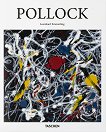
The rebel hero of Abstract Expressionism, Jackson Pollock (1912 - 1956) careened through his life like a firework across the American art landscape. Channeling ideas from sources as diverse as Picasso and Mexican surrealism, he rejected convention to develop his own way of seeing, interpreting, and expressing. Pollock’s most famous works are his drip paintings, where he dripped and poured household enamel paint over the canvas with a variety of instruments, from sticks to syringes, hardened brushes to broken bits of glass. The splattered results pulsate with energy, replacing the refinement of easel and brush with ... |
|
|
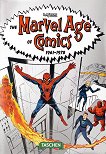
An Era of the Invincible. The making of household heroes and mythological universes. It was an age of mighty heroes, misunderstood monsters, and complex villains. With the publication of Fantastic Four No. 1 in November 1961, comics giant Marvel inaugurated a transformative era in pop culture. Through the next two decades, the iconic Hulk, Spider-Man, Iron Man, and the X-Men leapt, darted, and towered through its pages. Captain America was resurrected from his 1940s deep-freeze and the Avengers became the World’s Greatest Super Heroes. Daredevil, Doctor Strange, and dozens more were added to the pantheon, each with ... |
|
|
Multilingual Edition (English, French, German). ... An international guide to award winning packaging design. The field of package design never ceases to expand and innovate, making it one of the most vibrant, competitive, and fast-evolving areas in design today. It is influenced by various factors such as the consumer’s requirements, the ever-increasing marketing demands, evolving environmental policies, and the practice of adhering to the context of cultural aspects and diversity. By developing at such a demanding and rapid pace, package design encompasses many different elements and specialists, including designers, ... |