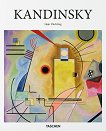
Over the course of his artistic career, Wassily Kandinsky (1866 - 1944) transformed not only his own style, but the course of art history. From early figurative and landscape painting, he went on to pioneer a spiritual, emotive, rhythmic use of color and line and is today credited with creating the first purely abstract work. As much a teacher and theorist as he was a practicing artist, Kandinsky's interests in music, theater, poetry, philosophy, ethnology, myth, and the occult, were all essential components to his painting and engraving. He was involved with both the influential Blaue Reiter and Bauhaus groups and ... |
|
|
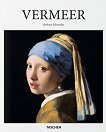
Though numbering just 35 known works, the œuvre of Johannes Vermeer (1632 - 1675) is hailed as one of the most important and inspiring portfolios in art history. His paintings have prompted a New York Times bestseller, a film starring Scarlett Johansson, and record visitor numbers at art institutions from Amsterdam to Washington. Vermeer's subjects focus on daily domestic activities, from letter writing to music playing to preparations in the kitchen. The scenes astound with their meticulous detail, majestic planes of light, and with Vermeer’s extraordinary ability to draw out narrative intrigues. In such ... |
|
|
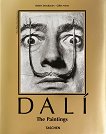
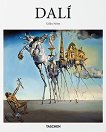
At the age of six, Salvador Dali (1904 - 1989) wanted to be a cook. At the age of seven, he wanted to be Napoleon. "Since then", he later said, "my ambition has steadily grown, and my megalomania with it. Now I want only to be Salvador Dali, I have no greater wish". Throughout his life, Dali was out to become Dali: that is, one of the most significant artists and eccentrics of the 20th century. This weighty volume is the most complete study of Dali's painted works ever published. After years of research, Robert Descharnes and Gilles Neret located painted works by the master that had been ... |
|
|
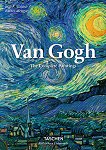
Vincent van Gogh's story is one of the most ironic in art history. Today, he is celebrated the world over as one of the most important painters of all time, recognized with sell-out shows, feted museums, and record prices of tens of millions of dollars at auction. Yet as he was painting the canvases that would subsequently become these sell-out modern masterpieces, van Gogh was battling not only the disinterest of his contemporary audiences but also devastating bouts of mental illness, with episodes of depression and paralyzing anxiety which would eventually claim his life in 1890, when he committed suicide shortly ... |
|
|
Painter, sculptor, writer, film-maker, and all-round showman Salvador Dali (1904 - 1989) was one of the twentieth century’s greatest exhibitionists and eccentrics. One of the first artists to apply the insights of Freudian psychoanalysis to art, he is celebrated in particular for his surrealist practice, with such conceits as the soft watches or the lobster telephone, now hallmarks of the surrealist enterprise, and of modernism in general. Dali frequently described his paintings as "hand-painted dream photographs". Their tantalizing tension and interest resides in the precise rendering of bizarre elements and ... |
|
|
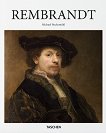
Rembrandt van Rijn (1606 - 1669) never left his homeland of the Netherlands but in his massive body of painting, drawing, and etching, he changed the course of Western art. His prolific oeuvre encompasses religious, historical, and secular scenes, as well as one of the most extraordinary series of portraits and self-portraits in history. Rembrandt's work foregrounds texture, light, and acute observation. Like sudden, startling apparitions in a shadowy street, his subjects are illuminated against deep, dark backgrounds and rendered with immense physical as well as psychological scrutiny. Whether biblical or ... |
|
|
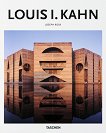
Louis Isadore Kahn (1901 - 1974) treated each building like a temple. Across the United States, in India, Bangladesh, Pakistan, and Israel, his designs combined the sleek, utilitarian surfaces of modernism with a devotion to geometric forms and a reverence for natural light that suffused his structures with a monumental and breathtaking spirituality. This essential introduction brings together 17 of Kahn's most important buildings across his cultural, governmental, religious, and residential repertoire. Plans, views, descriptions, and quality photographs trace the context and development of each project, while an ... |
|
|
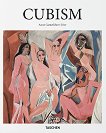
Pioneered by Picasso and Braque, Cubism has been described as the first avant-garde art movement of the 20th century. With inspiration from African and Native American art and sculpture, its practitioners deconstructed European conventions of viewpoint, form, perspective to create flattened, fragmented, and revolutionary images. Picasso's celebrated painting Les Demoiselles d'Avignon is typically regarded as the original cubist work, with its radical fracturing of objects and figures into distinct areas, corresponding to multiple different viewpoints. Cubism thereafter developed two distinct trends: Analytical ... |
|
|
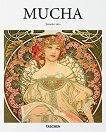
All about the Belle Époque. Delicate illustration that defined an era. ... With his instantly recognizable decorative style, Czech artist and Art Nouveau master Alphonse Mucha (1860 - 1939) defined the look of the fin-de-siecle. In evocative shades of peach, gold, ochre, and olive, his seductive compositions of patterns, flowers, and beautiful women became paradigms of the Belle Époque years. Mucha's work permeated illustration, posters, postcards, and the advertising designs of his day. His striking posters of star actress Sarah Bernhardt were particularly famous. Alongside this delicate decorative work, ... |
|
|
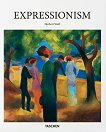
Sharp angles, strange forms, lurid colors, and distorted perspectives are classic hallmarks of Expressionism, the twentieth century movement that prioritized emotion over objective reality. Though particularly present in Germany and Austria, the movement’s approach flourished internationally and is today hailed as one of the most influential shifts in art history. With leading groups Die Brücke (The Bridge) and Der Blaue Reiter (The Blue Rider), and key players such as Wassily Kandinsky, Egon Schiele,and Emil Nolde, the Expressionists disowned Impressionism, which they regarded as man lowered to the position of a ... |
|
|
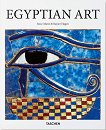
The art of ancient Egypt that has been handed down to us bears no names of its creators, and yet we value the creations of these unknown masters no less than the works of later centuries, such as statues by Michelangelo or the paintings by Leonardo da Vinci. This book introduces some of the most important masterpieces, ranging from the Old Kingdom during the Third millennium BC to the Roman Period. The works encompass sculptures, reliefs, sarcophagi, murals, masks, and decorative items, most of them now in the Egyptian Museum in Cairo, but some occupying places of honor as part of the World Cultural Heritage in museums ... |
|
|
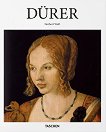
Prints of Darkness - The art, theory, and woodcut print revolution of Albrecht Dürer. A polymath of the German Renaissance, Albrecht Dürer (1471 - 1528) was a prolific artist, theorist, and writer whose works explored everything from religion to art theory to philosophy. His vast body of work includes altarpieces, portraits, self-portraits, watercolors, and books, but is most celebrated for its astonishing collection of woodcut prints, which transformed printmaking from an artisan practice into a whole new art form. Dürer’s woodcuts astonish in scale as much as detail. Through works such as Apocalypse and ... |