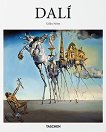
Painter, sculptor, writer, film-maker, and all-round showman Salvador Dali (1904 - 1989) was one of the twentieth century’s greatest exhibitionists and eccentrics. One of the first artists to apply the insights of Freudian psychoanalysis to art, he is celebrated in particular for his surrealist practice, with such conceits as the soft watches or the lobster telephone, now hallmarks of the surrealist enterprise, and of modernism in general. Dali frequently described his paintings as "hand-painted dream photographs". Their tantalizing tension and interest resides in the precise rendering of bizarre elements and ... |
|
|
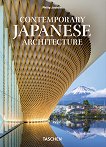
Multilingual Edition (English, French, German). ... A survey of Japan's contemporary architecture scene. Japan's contemporary architecture has long been among the most inventive in the world, recognized for sustainability and infinite creativity. No fewer than eight Japanese architects have won the Pritzker Prize. Since Osaka World Expo'70 highlighted contemporary forms, Japan has been a key player in global architecture. Tadao Ando's geometry put Japanese building on the map, bridging East and West. After his concrete buildings, figures like Kengo Kuma, Shigeru Ban, and Kazuyo Sejima pioneered a more ... |
|
|
Изданието е триезично - на английски, немски и френски език. 40th Anniversary Edition. ... "The works of Christo and Jeanne-Claude are monuments of transience. Gigantic in scale, they are always temporary, created to exist only for a limited time and to leave unique, unrepeatable impressions. From the smallest of the Packages made in Paris in the early 1960s, to the delicate pattern of hundreds of branches embraced by a translucent fabric veil... in Christo and Jeanne-Claude's works there is nothing abstract, nothing imagined; it is all there - corporeal and tangible." Lorenza Giovanelli Part biography, ... |
|
|
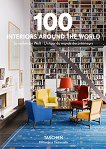
Making stops in North and South America, Europe, Asia, Africa and Australia, this edition rounds up some of today’s most exceptional and inspiring interiors across six continents. From rustic minimalism to urbane eclecticism, the selection celebrates a global spectrum of styles, united by authenticity, a love of detail, and a zest for individual expression that will never go out of fashion. Includes interiors in Argentina, Brasil, China, Cuba, Denmark, France, Germany, Greece, Indonesia, Italy, Japan, Kenya, Morocco, South Africa, Spain, Sweden, Turkey, the UK, the USA, and many more countries. With pictures by ... |
|
|
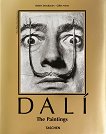
At the age of six, Salvador Dali (1904 - 1989) wanted to be a cook. At the age of seven, he wanted to be Napoleon. "Since then", he later said, "my ambition has steadily grown, and my megalomania with it. Now I want only to be Salvador Dali, I have no greater wish". Throughout his life, Dali was out to become Dali: that is, one of the most significant artists and eccentrics of the 20th century. This weighty volume is the most complete study of Dali's painted works ever published. After years of research, Robert Descharnes and Gilles Neret located painted works by the master that had been ... |
|
Следват резултати с по-слабо съвпадение на търсеното: |
|
Multilingual Edition (English, French, German). ... A tour of contemporary home decor around the world. With an inspirational richness and diversity of styles, these homes, residences, hideaways, and studios will astound and astonish, no matter the taste; be it rustic country cottage, New York-style loft, or bohemian bungalow. This survey of contemporary interior design carefully curates homes from all over the world - from Auckland, New Zealand, to Avignon, France. Mapped out through hundreds of images by renowned interior photographers, these gorgeous houses offer inspiration and ideas for your next renovation. Many ... |
|
|
Anguished art: The tortured talents of a post-Impressionist master. Today, the works of Vincent van Gogh (1853 - 1890) are among the most well-known and celebrated in the world. In Sunflowers, The Starry Night, Self-Portrait with Bandaged Ear, and many, many paintings and drawings beyond, we recognize an artist uniquely dexterous in the portrayal of mood and place through paint, pencil, charcoal, or chalk. Yet as he was deploying the lurid colors, emphatic brushwork, and contoured forms that would subsequently make his name and inspire generations of expressionist artists, van Gogh battled not only the disinterest of ... |
|
|
Henri Rousseau (1844 - 1910) was a clerk in the Paris customs service who dreamed of becoming a famous artist. At the age 49, he decided to give it a try. At first, Rousseau’s bright, bold paintings of jungles and exotic flora and fauna were dismissed as childish and simplistic, but his unique and tenacious style soon won acclaim. After 1886, he exhibited regularly at Paris’s prestigious Salon des Indépendants, and in 1908 he received a legendary banquet of honor, hosted by Picasso. Although best known for his tropical scenes, Rousseau, in fact, never left France, relying on books and magazines for inspiration, as ... |
|
|
Updated Edition. ... This handy, updated edition explores the Bauhaus School of Art and Design through some 575 illustrations and biographies of its key personalities. Realized in collaboration with the Bauhaus-Archiv in Berlin, the reference work is now available in Bibliotheca Universalis format, the perfect companion for your next trip to Berlin, Weimar, or Dessau. In a fleeting 14-year period between two world wars, Germany’s Bauhaus school of art and design changed the face of modernity. With utopian ideas for the future, the school developed a pioneering fusion of fine art, craftsmanship, and technology, which ... |
|
|
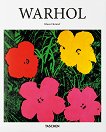
Andy Warhol (1928 - 1987) is hailed as the most important proponent of the Pop art movement. A critical and creative observer of American society, he explored key themes of consumerism, materialism, media, and celebrity. Drawing on contemporary advertisements, comic strips, consumer products, and Hollywood’s most famous faces, Warhol proposed a radical reevaluation of what constituted artistic subject matter. Through Warhol, a Campbell’s soup can and Coca Cola bottle became as worthy of artistic status as any traditional still life. At the same time, Warhol reconfigured the role of the artist. Famously stating "I ... |
|
|
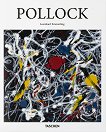
The rebel hero of Abstract Expressionism, Jackson Pollock (1912 - 1956) careened through his life like a firework across the American art landscape. Channeling ideas from sources as diverse as Picasso and Mexican surrealism, he rejected convention to develop his own way of seeing, interpreting, and expressing. Pollock’s most famous works are his drip paintings, where he dripped and poured household enamel paint over the canvas with a variety of instruments, from sticks to syringes, hardened brushes to broken bits of glass. The splattered results pulsate with energy, replacing the refinement of easel and brush with ... |
|
|
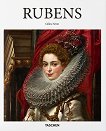
There are over 1,000 catalogued works by Sir Peter Paul Rubens (1577 - 1640), the 16th-century flag bearer for Baroque drama, movement, and sensuality. This essential introduction takes in the most important works from this astonishingly prolific oeuvre to explore Rubens’s influences and innovations, and his remarkable visual, and art historical, impact. The richly illustrated survey takes in Rubens’s portraits, landscapes, and historical paintings, as well as his famed and bountiful nudes. Along the way, we examine the artist’s astonishing technique and his deft ability to depict narrative in a compelling and legible ... |