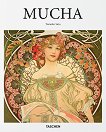
All about the Belle Époque. Delicate illustration that defined an era. ... With his instantly recognizable decorative style, Czech artist and Art Nouveau master Alphonse Mucha (1860 - 1939) defined the look of the fin-de-siecle. In evocative shades of peach, gold, ochre, and olive, his seductive compositions of patterns, flowers, and beautiful women became paradigms of the Belle Époque years. Mucha's work permeated illustration, posters, postcards, and the advertising designs of his day. His striking posters of star actress Sarah Bernhardt were particularly famous. Alongside this delicate decorative work, ... |
|
|
Italian-born Michelangelo di Lodovico Buonarroti Simoni (1475 - 1564) was a tormented, prodigiously talented, and God-fearing Renaissance man. His manifold achievements in painting, sculpture, architecture, poetry, and engineering combined body, spirit, and God into visionary masterpieces that changed art history forever. Famed biographer Giorgio Vasari considered him the pinnacle of Renaissance achievement. His peers called him simply Il Divino (the divine one). This book provides the essential introduction to Michelangelo with all the awe-inspiring masterpieces and none of the queues and crowds. With vivid illustration ... |
|
|
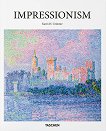
Discover how scenes of daily life and delicate dabs of color shocked the art world establishment. In this Taschen Basic Art introduction to Impressionism, we explore the artists, subjects, and techniques that first brought the easel out of the studio and shifted artistic attention from history, religion, or portraiture to the evanescent ebb and flow of modern life. As we tour the theaters, bars, and parks of Paris and beyond, we take in the movement's radical innovations in style and subject, from the principle of plein air painting to the rapid, broken brushwork that allowed the Impressionists to emphasize ... |
|
|
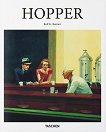
Edward Hopper (1882 - 1967) is something of an American success story, if only his success had come swifter. At the age of 40, he was a failing artist who struggled to sell a single painting. As he approached 80, Time magazine featured him on its cover. Today, Hopper is considered a giant of modern expression, with an uncanny, unforgettable, and utterly distinct sense for mood and place. Much of Hopper's work excavates modern city experience. In canvas after canvas, he depicts diners, cafes, shopfronts, street lights, gas stations, rail stations, and hotel rooms. The scenes are marked by vivid color juxtapositions ... |
|
|
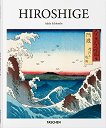
Utagawa Hiroshige (1797 - 1858) was one of the last great artists in the ukiyo-e tradition. Literally meaning "pictures of the floating world," ukiyo-e was a particular woodblock print genre of art that flourished between the 17th and 19th centuries. Subjects ranged from the bright lights and attractions of Edo (modern-day Tokyo), to spectacular natural landscapes. In the West, Hiroshige's prints became exemplary of the Japonisme that swept through Europe and defined the Western world's visual idea of Japan. Because they could be mass produced, ukiyo-e works were often used as designs for fans, ... |
|
|
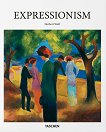
Sharp angles, strange forms, lurid colors, and distorted perspectives are classic hallmarks of Expressionism, the twentieth century movement that prioritized emotion over objective reality. Though particularly present in Germany and Austria, the movement’s approach flourished internationally and is today hailed as one of the most influential shifts in art history. With leading groups Die Brücke (The Bridge) and Der Blaue Reiter (The Blue Rider), and key players such as Wassily Kandinsky, Egon Schiele,and Emil Nolde, the Expressionists disowned Impressionism, which they regarded as man lowered to the position of a ... |
|
|
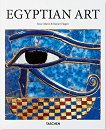
The art of ancient Egypt that has been handed down to us bears no names of its creators, and yet we value the creations of these unknown masters no less than the works of later centuries, such as statues by Michelangelo or the paintings by Leonardo da Vinci. This book introduces some of the most important masterpieces, ranging from the Old Kingdom during the Third millennium BC to the Roman Period. The works encompass sculptures, reliefs, sarcophagi, murals, masks, and decorative items, most of them now in the Egyptian Museum in Cairo, but some occupying places of honor as part of the World Cultural Heritage in museums ... |
|
|
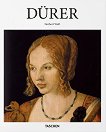
Prints of Darkness - The art, theory, and woodcut print revolution of Albrecht Dürer. A polymath of the German Renaissance, Albrecht Dürer (1471 - 1528) was a prolific artist, theorist, and writer whose works explored everything from religion to art theory to philosophy. His vast body of work includes altarpieces, portraits, self-portraits, watercolors, and books, but is most celebrated for its astonishing collection of woodcut prints, which transformed printmaking from an artisan practice into a whole new art form. Dürer’s woodcuts astonish in scale as much as detail. Through works such as Apocalypse and ... |
|
|
The Case Study House program (1945-1966) was a unique event in the history of American architecture. Sponsored by Arts & Architecture magazine, the program sought to respond to the postwar building boom with prototype modern homes that could be both easily replicated and readily affordable to the average American. Concentrated on the Los Angeles area, the Case Study Houses included 36 model homes commissioned from such major architects of the day as Richard Neutra, Raphael Soriano, Craig Ellwood, Charles and Ray Eames, Pierre Koenig, Eero Saarinen, A. Quincy Jones, and Ralph Rapson. Their criteria included "using, ... |
|
|
This is the Taschen 25 - Special edition! The Case Study House program (1945 - 66) was an exceptional, innovative event in the history of American architecture and remains to this day unique. The program, which concentrated on the Los Angeles area and oversaw the design of 36 prototype homes, sought to make available plans for modern residences that could be easily and cheaply constructed during the postwar building boom. The program's chief motivating force was "Arts & Architecture" editor John Entenza, a champion of modernism who had all the right connections to attract some of architecture's ... |
|
|
Caravaggio, or more accurately Michelangelo Merisi da Caravaggio (1571 - 1610), was always a name to be reckoned with. Notorious bad boy of Italian painting, the artist was at once celebrated and controversial: Violent in temper, precise in technique, a creative master, and a man on the run. This work offers a comprehensive reassessment of Caravaggio's entire oeuvre with a catalogue raisonné of his works. Each painting is reproduced in large format, with recent, high production photography allowing for dramatic close-ups with Caravaggio's ingenious details of looks and gestures. Five introductory chapters ... |
|
|
Multilingual Edition (English, French, German). ... The Way We Wore - The story of modern fashion from couture to mass market. The 20th century saw fashion evolve from an exclusive Parisian salon business catering for the wealthy elite into a global industry employing millions, with new trends whisked into stores before the last model has even left the catwalk. Along the way, the signature silhouettes of each era evolved beyond recognition. For women, House of Worth crinolines gave way to Vionnet’s bias-cut gowns, Dior’s New Look to Quant’s Chelsea Look, Halston’s white suit to Frankie B.’s low-rise jeans. In menswear, ... |