Among the few women artists who have transcended art history, none had a meteoric rise quite like Mexican painter Frida Kahlo (1907 - 1954). Her unmistakable face, depicted in over fifty extraordinary self-portraits, has been admired by generations; along with hundreds of photographs taken by notable artists such as Edward Weston, Manuel and Lola Alvarez Bravo, Nickolas Muray, and Martin Munkácsi, they made Frida Kahlo an iconic image of 20th century art. After an accident in her early youth, Frida became a painter of her own free will. Her marriage to Diego Rivera in 1929 placed her at the forefront of an artistic ... |
|
|
Frida Kahlo transcended art history like no woman artist before her. She was a key figure of Mexican revolutionary modern art and a pioneer of the politics of gender, sexuality, and feminism. This monograph combines Kahlo’s paintings with rare photos, diary pages, and an illustrated biography. Among the women artists who have transcended art history, none had a meteoric rise quite like Mexican painter Frida Kahlo (1907 - 1954). Her unmistakable face, depicted in over fifty extraordinary self-portraits, has been admired by generations; along with hundreds of photographs taken by notable artists such as Manuel and Lola ... |
|
|
The arresting pictures of Frida Kahlo were in many ways expressions of trauma. Through a near-fatal road accident at the age of 18, failing health, a turbulent marriage, miscarriage and childlessness, she transformed the afflictions into revolutionary art. In literal or metaphorical self-portraiture, Kahlo looks out at the viewer with an audacious glare, rejecting her destiny as a passive victim and rather intertwining expressions of her experience into a hybrid surreal-real language of living: hair, roots, veins, vines, tendrils and fallopian tubes. Many of her works also explore the Communist political ideals which ... |
|
|
Over 200 paintings, sculptures, photographs, and conceptual pieces trace the story of modern art's innovation and adventure. With explanatory texts for each work, and essays introducing each of the major modern movements, this is an authoritative overview of the ideas and the artworks that shook up standards, assaulted the establishment, and trailblazed new ideas. A blow-by-blow account of groundbreaking modernism. Most art historians agree that the modern art adventure first developed in the 1860s in Paris. A circle of painters, whom we now know as Impressionists, began painting pictures with rapid, loose brushwork. ... |
|
Следват резултати с по-слабо съвпадение на търсеното: |
|
Multilingual Edition (English, French, German). ... A tour of contemporary home decor around the world. With an inspirational richness and diversity of styles, these homes, residences, hideaways, and studios will astound and astonish, no matter the taste; be it rustic country cottage, New York-style loft, or bohemian bungalow. This survey of contemporary interior design carefully curates homes from all over the world - from Auckland, New Zealand, to Avignon, France. Mapped out through hundreds of images by renowned interior photographers, these gorgeous houses offer inspiration and ideas for your next renovation. Many ... |
|
|
Henri Rousseau (1844 - 1910) was a clerk in the Paris customs service who dreamed of becoming a famous artist. At the age 49, he decided to give it a try. At first, Rousseau’s bright, bold paintings of jungles and exotic flora and fauna were dismissed as childish and simplistic, but his unique and tenacious style soon won acclaim. After 1886, he exhibited regularly at Paris’s prestigious Salon des Indépendants, and in 1908 he received a legendary banquet of honor, hosted by Picasso. Although best known for his tropical scenes, Rousseau, in fact, never left France, relying on books and magazines for inspiration, as ... |
|
|
Updated Edition. ... This handy, updated edition explores the Bauhaus School of Art and Design through some 575 illustrations and biographies of its key personalities. Realized in collaboration with the Bauhaus-Archiv in Berlin, the reference work is now available in Bibliotheca Universalis format, the perfect companion for your next trip to Berlin, Weimar, or Dessau. In a fleeting 14-year period between two world wars, Germany’s Bauhaus school of art and design changed the face of modernity. With utopian ideas for the future, the school developed a pioneering fusion of fine art, craftsmanship, and technology, which ... |
|
|
Andy Warhol (1928 - 1987) is hailed as the most important proponent of the Pop art movement. A critical and creative observer of American society, he explored key themes of consumerism, materialism, media, and celebrity. Drawing on contemporary advertisements, comic strips, consumer products, and Hollywood’s most famous faces, Warhol proposed a radical reevaluation of what constituted artistic subject matter. Through Warhol, a Campbell’s soup can and Coca Cola bottle became as worthy of artistic status as any traditional still life. At the same time, Warhol reconfigured the role of the artist. Famously stating "I ... |
|
|
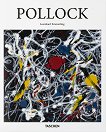
The rebel hero of Abstract Expressionism, Jackson Pollock (1912 - 1956) careened through his life like a firework across the American art landscape. Channeling ideas from sources as diverse as Picasso and Mexican surrealism, he rejected convention to develop his own way of seeing, interpreting, and expressing. Pollock’s most famous works are his drip paintings, where he dripped and poured household enamel paint over the canvas with a variety of instruments, from sticks to syringes, hardened brushes to broken bits of glass. The splattered results pulsate with energy, replacing the refinement of easel and brush with ... |
|
|
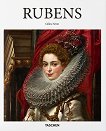
There are over 1,000 catalogued works by Sir Peter Paul Rubens (1577 - 1640), the 16th-century flag bearer for Baroque drama, movement, and sensuality. This essential introduction takes in the most important works from this astonishingly prolific oeuvre to explore Rubens’s influences and innovations, and his remarkable visual, and art historical, impact. The richly illustrated survey takes in Rubens’s portraits, landscapes, and historical paintings, as well as his famed and bountiful nudes. Along the way, we examine the artist’s astonishing technique and his deft ability to depict narrative in a compelling and legible ... |
|
|
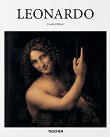
Filling notebook after notebook with sketches, inventions, and theories, Leonardo da Vinci (1452 - 1519) not only stands as one of the most exceptional draftsmen of art history, but also as a mastermind and innovator who anticipated some of the greatest discoveries of human progress, sometimes centuries before their material realization. From the smallest arteries in the human heart to the far-flung constellations of the universe, Leonardo saw nature and science as being unequivocally connected. His points of inquiry and invention spanned philosophy, anatomy, geology, and mathematics, from the laws of optics, ... |
|
|
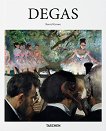
Most commonly associated with the birth of the Impressionist movement in mid-19th-century Paris, Edgar Degas (1834 - 1917) in fact defied easy categorization and instead developed a unique style, strongly influenced by Old Masters, the body in motion, and everyday urban life. The elder scion of a wealthy family, Degas cofounded a series of exhibitions of "Impressionist" art, but soon disassociated himself from the group in pursuit of a more realist approach. His subjects centered on the teeming, noisy streets of Paris, as well as its leisure entertainments, such as horse racing, cabarets, and, most particularly, ... |