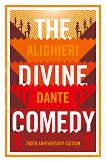
Dante's dramatic journey down the circles of Hell, up the mountain of Purgatory and through the spheres of Heaven in search of redemption - and his encounter with devils, monsters and the souls of sinners and saints - is one of the cornerstones of Western literature, the summit of medieval thinking and arguably the highest poetic achievement of all time. This 700th Anniversary Edition of The Divine Comedy is presented in a verse translation by acclaimed poet and prize-winning translator J. G. Nichols, together with extensive notes, illustrations by Gustave Dore and a critical apparatus focusing on the author's ... |
|
|
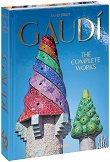
40th Anniversary Edition. ... Antoni Gaudi merged Orientalism, natural forms, and new materials into a Modernista aesthetic that made Barcelona a mecca for architecture fans. With new photography, plans, Gaudi's drawings, and a complete appendix of his works including unfinished projects, this book takes us into the proud Catalonian's unique worldview. Freedom of form with the Dante of architecture. The life of Antoni Gaudi (1852 - 1926) was full of complexity and contradictions. As a young man he joined the Catalonian nationalist movement and was critical of the church; toward the end of his life he devoted ... |
|
|
When the world-weary dandy Eugene Onegin moves from St Petersburg to take up residence in the country estate he has inherited, he strikes up an unlikely friendship with his neighbour, the poet Vladimir Lensky. Coldly rejecting the amorous advances of Tatyana and cynically courting her sister Olga - Lensky's fiancee - Onegin finds himself dragged into a tragedy of his own making. Eugene Onegin - presented here in a sparkling translation by Roger Clarke, along with extensive notes and commentary - was the founding text of modern Russian literature, marking a clean break from the high-flown classical style of its ... |
|
|
We takes place in a distant future, where humans are forced to submit their wills to the requirements of the state, under the rule of the all-powerful Benefactor, and dreams are regarded as a sign of mental illness. In a city of straight lines, protected by green walls and a glass dome, a spaceship is being built in order to spearhead the conquest of new planets. Its chief engineer, a man called Delta-503, keeps a journal of his life and activities: to his mathematical mind everything seems to make sense and proceed as it should, until a chance encounter with a woman threatens to shatter the very foundations of the world ... |
|
|
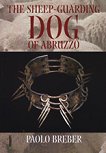
The Author describes the dog kept and bred by the shepherds of mountainous Abruzzo in Italy to repel wolves and bears from their flocks. The way it behaves and works, its life history, and its relationship to the environment are recounted. The dog is placed in the wider perspective of the pastoral dogs of the Old World and historical documents are provided to indicate the antiquity of the type. The degenerating effect of kennel-breeding for conformation is stressed. The book does not contain instructions for the private fancier intending to keep one of these dogs as a companion. ... |
|
|
"In Genesis, my camera allowed nature to speak to me. And it was my privilege to listen." Sebastiao Salgado On a very fortuitous day in 1970, 26-year-old Sebastião Salgado held a camera for the first time. When he looked through the viewfinder, he experienced a revelation: suddenly life made sense. From that day onward - though it took years of hard work before he had the experience to earn his living as a photographer - the camera became his tool for interacting with the world. Salgado, who "always preferred the chiaroscuro palette of black-and-white images," shot very little color in his early ... |
|
|
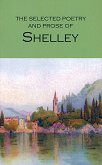
Shelley's short, prolific life produced some of the most memorable and well-known lyrics of the Romantic period. But he was also the most radical writer in the English literary tradition of his day, a fiery political visionary committed to social change and progress. The generous selection in this volume represents the wide range of his writing, both poetry and prose. Arranged chronologically, the accompanying introductory essays set Shelley's works in their historical, social and political context. They provide a vivid insight into the life and times of this volcanic spirit whose inspiring voice called on the ... |
|
|
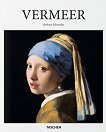
Though numbering just 35 known works, the œuvre of Johannes Vermeer (1632 - 1675) is hailed as one of the most important and inspiring portfolios in art history. His paintings have prompted a New York Times bestseller, a film starring Scarlett Johansson, and record visitor numbers at art institutions from Amsterdam to Washington. Vermeer's subjects focus on daily domestic activities, from letter writing to music playing to preparations in the kitchen. The scenes astound with their meticulous detail, majestic planes of light, and with Vermeer’s extraordinary ability to draw out narrative intrigues. In such ... |
|
|
Finding productivity in anxious times. A toolkit of accessible, science-backed strategies, How to Calm Your Mind reveals the path to a less anxious life, and even greater productivity, through calm. Productivity advice works - and we need it now more than ever - but it's just as important that we also develop our capacity for calm. By finding calm and overcoming anxiety, we don’t just feel more comfortable in our own skin, we invest in the missing piece that leads our efforts to become sustainable over time. We build a deeper, more expansive reservoir of energy to draw from throughout the day, and have greater mental ... |
|
|
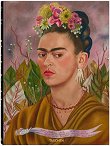
Among the few women artists who have transcended art history, none had a meteoric rise quite like Mexican painter Frida Kahlo (1907 - 1954). Her unmistakable face, depicted in over fifty extraordinary self-portraits, has been admired by generations; along with hundreds of photographs taken by notable artists such as Edward Weston, Manuel and Lola Alvarez Bravo, Nickolas Muray, and Martin Munkácsi, they made Frida Kahlo an iconic image of 20th century art. After an accident in her early youth, Frida became a painter of her own free will. Her marriage to Diego Rivera in 1929 placed her at the forefront of an artistic ... |
|
|
Illustrated by Fausto Biabchi. ... "I have got to do it, because she has given me a reason to do it which I will not say out loud. She must die, because if she doesn't die she'll deceive other men. I'll put out the light of this torch, and then I'll put out the light of her life." From the Book When Othello, the Moorish general of Venice, marries Desdemona, the daughter of a rich Venetian, he must prove that they are really in love. But his "honest" friend Iago has other plans, for power revenge. They travel to the island of Cyprus, and Iago works to set Othello against his new wife ... |
|
|
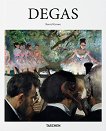
Most commonly associated with the birth of the Impressionist movement in mid-19th-century Paris, Edgar Degas (1834 - 1917) in fact defied easy categorization and instead developed a unique style, strongly influenced by Old Masters, the body in motion, and everyday urban life. The elder scion of a wealthy family, Degas cofounded a series of exhibitions of "Impressionist" art, but soon disassociated himself from the group in pursuit of a more realist approach. His subjects centered on the teeming, noisy streets of Paris, as well as its leisure entertainments, such as horse racing, cabarets, and, most particularly, ... |