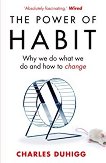
Why do we do develop habits? And how can we change them? We can always change. In The Power of Habit, award winning New York Times business reporter Charles Duhigg translates cutting edge behavioural science into practical self improvement action, distilling advanced neuroscience into fascinating narratives of transformation. Why can some people and companies change overnight, and some stay stuck in their old ruts? The answer lies deep in the human brain, and The Power of Habits reveals the secret pressure points that can change a life. From Olympic swimmer Michael Phelps to Martin Luther King Jr., from the CEO of ... |
|
|
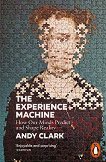
How our minds predict and shape reality. A grand new vision of cognitive science that explains how our minds build our worlds. For as long as we've studied the mind, we've believed that information flowing from our senses determines what our mind perceives. But as our understanding has advanced in the last few decades, a hugely powerful new view has flipped this assumption on its head. The brain is not a passive receiver, but an ever-active predictor. At the forefront of this cognitive revolution is widely acclaimed philosopher and cognitive scientist Andy Clark, who has synthesized his ground-breaking work on ... |
|
|
Modern companies face a number of challenges in performing their activities. The business environment in which they operate is characterized by dynamics, intense competition and a high degree of uncertainty and risk. Fluctuations in market demand are becoming larger and more unpredictable, and competition between goods and services offered in these markets is intensifying. All these factors require companies to take the necessary action to adapt to new conditions. The production of goods and the provision of services that customers want requires companies to pay increasing attention to their resource availability - in ... |
|
Следват резултати с по-слабо съвпадение на търсеното: |
|
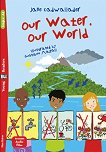
How we look after water is something that will greatly affect the future of our Earth and the wellbeing of its inhabitants. This book asks children to think about the questions: What do you know about water? How much water is there on Earth and why is it so important? What do you know about the animals that live in our oceans, rivers and lakes? Are we looking after this vital natural resource? It also tells three stories from different parts of the world about how children have dealt with problems related to water. Vocabulary areas: materials, wild animals, nature, time, work. Grammar and Structure: Present simple and ... |
|
|
It has become a truism that you may not be interested in politics, but politics is interested in you. Politics is inescapable because the term denotes, in its widest sense, the way in which relations of power are constructed in a given society. And there is no escaping power in the relations between human beings. In this volume we have attempted to unveil the origins, evolution and meaning of key political terms, as well as to outline the debates around each one. It is our conviction that this effort will help not only our students but also the general public to become fruitfully involved in current politics in the ... |
|
|
Witness our incredible human story unfold - from the very first people in Africa to the collapse of Communism and beyond - exquisitely charted map by map. Come on a journey through global history, told in more than 130 specially made maps that each offer a window on a key event. Step into the action and follow Ghengis Khan sweeping through China, Napoleon conquering Europe, or two world wars raging across the globe. See empires rise and fall - from the Egyptians and the Aztecs to the British Empire and the Soviet Union. History of the World Map by Map also explains how elements of civilization, such as writing, printing, ... |
|
|
The Fight for the World`s Most Critical Technology. Power in the modern world - military, economic, geopolitical - is built on a foundation of computer chips. America has maintained its lead as a superpower because it has dominated advances in computer chips and all the technology that chips have enabled. (Virtually everything runs on chips: cars, phones, the stock market, even the electric grid.) Now that edge is in danger of slipping, undermined by the naïve assumption that globalising the chip industry and letting players in Taiwan, Korea and Europe take over manufacturing serves America's interests. ... |
|
|
A brief history of humankind. ... Planet Earth is 4.5 billion years old. In just a fraction of that time, one species among countless others has conquered it. Us. We are the most advanced and most destructive animals ever to have lived. What makes us brilliant? What makes us deadly? What makes us Sapiens? In this bold and provocative book, Yuval Noah Harari explores who we are, how we got here and where we’re going. Sapiens is a thrilling account of humankind’s extraordinary history - from the Stone Age to the Silicon Age - and our journey from insignificant apes to rulers of the world. ... |
|
|
Meta-anthropology of the history of the 21st century. The author sets out his philosophical perspective on the causes and aftermath of the war in Ukraine through the prism of the meta-anthropology of history, drawing on the biblical parable of David and Goliath to clarify the dichotomy between the new humanism and neo-totalitarianism. The new humanism is not just an ideology or a practice of sympathy for the afflicted, especially in war, but is expressed in an effective and wise understanding of the Other that prevents death and destruction. Most importantly, the new humanism must actually prevent and stop crimes against ... |
|
|
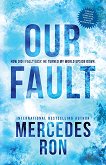
Continuation of the story in the book Your Fault. ... How did i fall? Easy. He turned my world upside down. Nick and Noah's rocky relationship is struggling through its worst moment, and it seems that nothing can go back to the way it was before. They will have to surmount a new and frightening set of challenges to finally understand if they are really made for each other or if being apart is their only chance to be happy. Love is not always enough, and forgiveness sometimes doesn't fix what's been broken. But can you forget such a strong connection? How can memories tattooed on the heart be erased? Will ... |
|
|
A dead body is dredged from the Thames, presumed to be the son of wealthy miser John Harmon, in Charles Dickens final novel, "Our Mutual Friend". Part of the Macmillan Collector's Library - a series of stunning, clothbound, pocket sized classics with gold foiled edges and ribbon markers. These beautiful books make perfect gifts or a treat for any book lover. This edition has an introduction by Lucinda Dickens Hawksley and original illustrations by Marcus Stone. John Harmon made his fortune collecting "dust", and on his death his estranged son is due to inherit his wealth on the condition that ... |
|
|
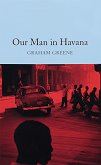
Complete and unabridged. A pocket sized book - 10 x 15.5 cm. ... Life in pre-revolutionary Cuba is not easy and James Wormold, a failing vacuum cleaner salesman, is struggling to fund the increasingly lavish lifestyle of his manipulative sixteen year-old daughter, Milly. So when an enigmatic Englishman offers him an extra income in return for a little spying, he is sorely tempted... But when the fake reports he's been sending to London start to come true, Havana suddenly becomes a very dangerous place indeed. Both a brilliant Cold War thriller and hilarious work of satire, "Our Man in Havana" is Graham ... |