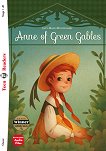
One day, in Canada, an eleven year old girl, Anne, arrives at Green Gables. She is going to live with Marilla and Matthew Cuthbert, who are brother and sister. But Anne does not know that Matthew and Marilla want a boy and not a girl. The bestselling novel by Canadian author Lucy Maud Montgomery. Vocabulary areas: Home, School, Family, Nature, Colours, Clothing. Grammar and Structure: Simple Present: states and habits, Present Continuous: actions in progress, Past Simple: finished actions, Future forms: Present, Continuous, going to, will, Can: ability, Could: ability, Must: obligation, Have to: necessity, Will: offers, ... |
|
|
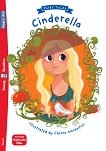
Retold by Lisa Suett. ... Poor Cinderella! She works all day and her two horrible stepsisters don't help her. One day an invitation arrives from the Prince. But Cinderella can't go to the party because she's got work to do. But her fairy godmother arrives and amazing things happen! Does she go to the party? Does she meet the Prince?"— Oh no! I must go. The magic stops at midnight - said Cinderella. — Wait! Come back! I don't know your name - called the Prince." From the book Vocabulary areas: clothes, housework. Grammar and structures: Past simple regular and irregular forms, Verb + infinitive, ... |
|
|
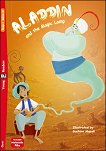
Retold by Jane Cadwallader. ... Aladdin is a poor boy who plays all day long in the streets with his monkey, but something will change his life. Aladdin loves Bulbul but his love is impossible. She is a princess and he is just a poor boy. But the magic lamp of a bad magician changes everything and helps Aladdin to get what he wants. Well, that's what he thinks! The bad magician has other ideas! Vocabulary areas: The home, animals, numbers, fruit, the world around us. Grammar and Structures: Present simple, Present continuous, Prepositions of place, Question words, Let's, Like + v + ing, Adjectives of description ... |
|
|
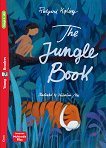
Mowgli is Little Frog in the language of the jungle. This is not a funny film for children. People and animals die. And one child kills the great tiger and changes the laws of the jungle."– I can call him Mowgli - she said to her husband." From the book Vocabulary areas: Animals, adventure, family. Grammar and Structure: Simple present for narrative (common verbs- all forms), Simple past for narrative (common verbs - all forms), Modal verbs can and could for ability; must for necessity / obligation, Positive, comparative and superlative adjectives adverbs of time and manner, Connectives: and but so because, ... |
|
|
Retold by Lisa Suett. ... Use this play-script version to prepare a fun and amusing stage version of the English legend of Robin Hood. Follow Robin Hood's adventures in Sherwood Forest in this easy-tofollow drama version based on the popular legend of Robin Hood. Robin Hood and his Merry Men hatch a plan to rob the evil Sheriff of Nottingham and give back the money to the poor. Vocabulary areas: nature, adjectives to describe character and appearance. Grammar and structures: present simple; direct speech as drama; present continuous; verb+ing; will; prepositions of place; superlatives; question words: where, what, ... |
|
|
The classic story of a young girl who falls into a hole, eats and drinks poison and grows bigger and smaller."It was a hot, hot day; her boring sister was reading a boring book - with no pictures! - and Alice didn't know what to do..." From the book Vocabulary areas: Gender and gender role. Grammar and Structure: Common regular and irregular verbs in the simple past, all forms, Common regular and irregular verbs in the present, all forms, There is / are / was / were, all forms + simple determiners, I think / I'm sure + verb, Modal verbs: can and could for ability, Adverbs of manner and frequency, ... |
|
|
A young beggar boy meets the Prince of Wales by chance. This is a moment that will change their lives forever. Two boys are born on the same day, but their lives are very different. Edward Tudor is a prince and Tom Canty is a pauper. One day they decide to change identities. The poor boy's dreams come true and he lives like a prince. The prince, on the other hand, discovers what life is like on the poor streets of London. But are dreams what they really seem? The boys soon find out. Vocabulary areas: adjectives, feelings, emotions. Grammar and Structure: Present simple, Direct speech as drama, some / any, ... |
|
|
How we look after water is something that will greatly affect the future of our Earth and the wellbeing of its inhabitants. This book asks children to think about the questions: What do you know about water? How much water is there on Earth and why is it so important? What do you know about the animals that live in our oceans, rivers and lakes? Are we looking after this vital natural resource? It also tells three stories from different parts of the world about how children have dealt with problems related to water. Vocabulary areas: materials, wild animals, nature, time, work. Grammar and Structure: Present simple and ... |
|
|
Journey to the center of Earth is a masterpiece by Jules Verne: a master of adventure stories. He also wanted children to think about nature. This story asks them to wonder what can be found underground and if there is another world there. It is told by a young man, Axel, who with his uncle and a guide go down under the Earth through the crater of a volcano. The children follow them through tunnels and caves to find strange plants and animals and have exciting adventures. It's a story about natural phenomena but also about persistence, initiative and courage in the face of the unknown. Vocabulary areas: science, ... |
|
|
Harry is the very last person to volunteer for a sport competition! In this story our reluctant hero braves golf and volleyball to come out tops (to everyone's surprise!). Harry and his three friends are selected to take part in the Police Sport Competition. They arrive at the luxury hotel by the sea where the competition is to take place. Everything seems normal... but something dark is going on at the hotel. Vocabulary areas: Sports and leisure, time, clothes and materials, work, the world around us. Grammar and Structure: Past simple, Past progressive, Present perfect, Will, Going to, Tag questions, Should, Must, ... |
|
|
Emma and Harry went down the River Nile in a boat. They sailed through the desert and visited lots of pyramids. One day, a young girl spoke to them. The Adventure is ready to begin. Two police officers, Harry and Emma, are sent to investigate an ancient Egyptian tomb where stolen gold is hidden. Harry is not happy and his mood gets worse when he finds out that a young girl is going to be their guide. However, Harry and Emma go into the tomb of the ancient Egyptian queen Nefertari, led by Chione. What dangers will they meet? And what will they find inside? Vocabulary areas: The world around us, feelings, food, materials. ... |
|
|
Retold by Lisa Suett. ... Hansel and Gretel are lost in the forest. When they find a house made of sweets, they can't believe their eyes. But the old woman who lives there has a wicked plan! Will Hansel and Gretel ever find their way home again?"The next day, the old witch put Hansel in a cage. Gretel had to cook lots of food for Hansel. The witch wanted a fat Hansel. But Gretel was clever. She had a plan, too." From the book Vocabulary areas: In the forest (animals and nature), the house, sweet food. Grammar and Structure: Present simple, Past simple, Past continuous, Present perfect simple, Must for ... |