The toxicity of heavy metals is a major threat to mankind. These metals possess no biological role, but they are harmful to the human body and its proper functioning. Their adverse effects manifest severe health risks. Heavy metals are well-known environmental pollutants contaminating terrestrial and aquatic ecosystems as well as air. Released in the environment, they accumulate in plants and further in animals and via the food chain enter the human body. In each country diverse precautions are in action to protect the public health from these pollutants. Different standards adopted by EC are applied to control, prevent and treat metal toxicity resulting from occupational exposure or environmental pollution. Metal toxicity depends on the absorbed dose, route and duration of exposure and could be manifested as acute or chronic. Heavy metal intoxication leads to various disorders due to oxidative stress induced by heavy metals. They easily accumulate in the body, but their route of excretion is long and complicated. Not released on time from the body, some of them can be deadly to humans. Most heavy metals occur naturally, but some are derived from anthropogenic sources. The rapid industry development in the last century has caused massive increase in the heavy metals uptake in the population. Mercury, lead, manganese, cadmium, and arsenic are the most common heavy metals that cause human poisoning. Acute or chronic poisoning can occur after exposure to heavy metals through contaminated water, air and food. Once bio-accumulated in the organism, heavy metals disrupt molecular processes as growth, proliferation, differentiation, DNA repair processes, apoptosis and the general metabolism. Heavy metals also induce Reactive Oxigen Species (ROS) production. High amount of ROS can unlocks carcinogenesis. Chromium, cadmium, and arsenic cause genomic instability and can selectively bind to important for life biomacromolecules.
The monograph also examines the harmful effects of all classes of pesticides on living organisms and particularly their toxicity on the cell and body. Some pesticides include in their structure heavy metals as Hg, Cd, As and Cr. Such pesticides are extremely complicated for detoxification by bacteria, plants animals and humans. Often, the resulting metabolites obtained from pesticides' degradation in the human body are much more toxic than the initial compound. Besides, some xenobiotics become more toxic in vivo due to their biochemical transfigurations. This book provides multifaceted knowledge on all these topics.
The monograph is suitable for experts in toxicology of heavy metals and pesticides on microorganisms, plants, animals and humans and environmental pollution. It will be useful for biologists, bachelor's and master's degree students in Life Sciences, Microbiology and all interested in human health.
Assoc. Prof. Galina Satchanska, PhD, is Head of the Department of Natural Sciences at the
New Bulgarian University, Sofia. She graduated in Biochemistry and Microbiology from the Faculty of Biology,
Sofia University St. Kl. Ohridski, and joined the Institute of Molecular Biology at the Bulgarian Academy of Sciences.
Satchanska obtained a PhD in Molecular Environmental Microbiology, being supervised by Prof. E. Golovinsky, DSc, DHC. She has studied bacteria in heavy metal and other xenobiotics polluted soils and waters tackling environmental pollution. Satchanska has been invited multiple times as a guest scientist at the Helmholtz Research Center Dresden-Rossendorf in Germany and at the Center for Bioengineering Gilbert Durand, Toulouse, France. She was awarded fellowships by BMBF and DAAD, Germany, UNESCO and NATO. She is a member of the Board of the Bulgarian Society of Microbiology (Union of Scientists in Bulgaria and Federation of European Microbiological Societies - FEMS) and of FEMS Election Committee (2017 - 2019), and is currently the Delegate for Bulgaria at FEMS Council. Satchanska is a member of the Academic Council of New Bulgarian University and is in charge of the university's Educational and Research Laboratory in Biology.












 Книги
Книги 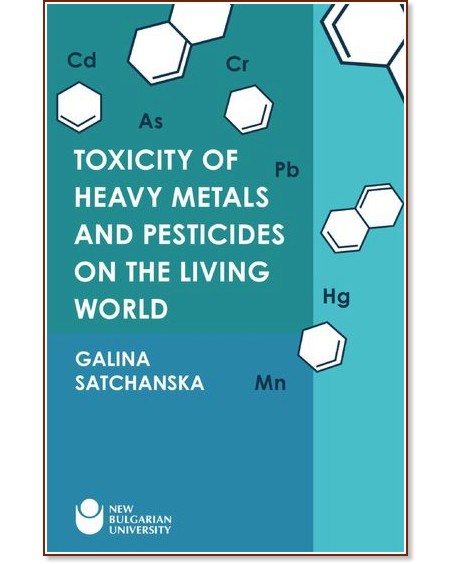




 Рейтинг: 9.00 / 2 гласа