Notebook in Human Biology for Students in Specialty: Medicine. ... |
|
|
This textbook includes selected lectures from the course in Human Biology for English-speaking medical students at the Faculty of Medicine of Sofia University "St. Kliment Ohridski". The lectures are accompanied by PowerPoint presentations, including more than 500 figures. ... |
|
|
Shortlisted for the Royal Society Science Book Prize 2021. In Sweden, refugee children fall asleep for months and years at a time. In upstate New York, high school students develop contagious seizures. In the US Embassy in Cuba, employees complain of headaches and memory loss after hearing strange noises in the night. These disparate cases are some of the most remarkable diagnostic mysteries of the twenty-first century, as both doctors and scientists have struggled to explain them within the boundaries of medical science and - more crucially - to treat them. What unites them is that they are all examples of a particular ... |
|
|
The toxicity of heavy metals is a major threat to mankind. These metals possess no biological role, but they are harmful to the human body and its proper functioning. Their adverse effects manifest severe health risks. Heavy metals are well-known environmental pollutants contaminating terrestrial and aquatic ecosystems as well as air. Released in the environment, they accumulate in plants and further in animals and via the food chain enter the human body. In each country diverse precautions are in action to protect the public health from these pollutants. Different standards adopted by EC are applied to control, prevent ... |
|
|
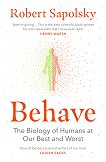
The Biology of Humans at our Best and Worst. ... Why do human beings behave as they do? We are capable of savage acts of violence but also spectacular feats of kindness: is one side of our nature destined to win out over the other? Every act of human behaviour has multiple layers of causation, spiralling back seconds, minutes, hours, days, months, years, even centuries, right back to the dawn of time and the origins of our species. In the epic sweep of history, how does our biology affect the arc of war and peace, justice and persecution? How have our brains evolved alongside our cultures? This is the exhilarating ... |
|
|
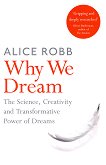
The Science, Creativity and Transformative Power of Dreams. ... We all dream, and 98 per cent of us can recall our dreams the next morning. Even in today's modern age, it is human nature to wonder what they mean. With incredible new discoveries and stunning science, "Why We Dream' will give you dramatic insight into yourself and your body. You'll never think of dreams in the same way again... Groundbreaking science is putting dreams at the forefront of new research into sleep, memory, the concept of self and human socialization. Once a subject of the New Age and spiritualism, the science of dreams is ... |
|
|
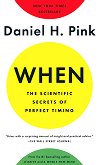
New York Times bestseller. From the )1 bestselling author of "Drive" and "A whole new mind". "Brims with a surprising amount of insight and practical advice." The Wall Street Journal ... The groundbreaking book that unlocks the scientific secrets of good timing to help you flourish at work, at school, and at home. Every day we confront a never-ending stream of "when" decisions. When to change jobs. When to schedule a meeting or a class. When to get serious about a person or a project. Yet we make such decisions haphazardly-based on intuition and guesswork. In "When", ... |
|
|
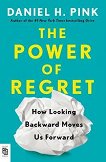
How looking backward moves us forward. Drawing on research in social psychology, neuroscience, and biology, Pink debunks the myth of the no regrets philosophy of life. And using the largest sampling of American attitudes about regret ever conducted as well as his own World Regret Survey which has collected regrets from more than 15,000 people in 105 countries he lays out the four core regrets that each of us has. These deep regrets offer compelling insights into how we live and how we can find a better path forward. As he did in his bestsellers Drive, When, and A Whole New Mind, Pink lays out a dynamic new way of ... |
|
|
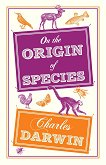
When the young naturalist Darwin set sail on a round the world expedition at the end of 1831, it was only with a vague notion that the relationships between all life forms, both present and extinct, were more complex than the Christian version of the world's creation purported them to be. During his five year voyage of discovery on board HMS Beagle and more than two decades subsequently devoted to research, he painstakingly collected a mass of evidence from across the planet - from Paraguay and the Galápagos Islands to Staffordshire and Scotland - building a compelling case for the theory of natural selection, ... |
|
|
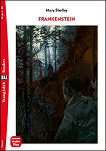
Adaptation and activities by Elizabeth Ferretti. ... After many more days and nights of study, I discovered exactly how life was created. With this knowledge I became the first man in history to have the power to create life from death. Victor Frankenstein is a young, ambitious scientist who wants to make a better world, but does not understand the consequences of his work. Victor makes great advances in the study of medicine and biology and creates a new species of human being - one that is so terrifying it is known simply as the monster. In this fantastic adventure story, Victor and the monster fight an epic battle of ... |
|
|
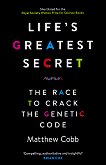
Shortlisted for the Royal Society Winton Prize for Science Books. ... Life's Greatest Secret is the story of the discovery and cracking of the genetic code. This great scientific breakthrough has had far-reaching consequences for how we understand ourselves and our place in the natural world. The code forms the most striking proof of Darwin's hypothesis that all organisms are related, holds tremendous promise for improving human well-being, and has transformed the way we think about life. Matthew Cobb interweaves science, biography and anecdote in a book that mixes remarkable insights, theoretical dead-ends and ... |
|
|
Учебният предмет биология и здравно образование в 9. клас (на английски език) включва овладяването на знания и умения, които са свързани със структурата на човешкия организъм, с жизнените процеси, извършващи се в него, с акцент върху опазване на здравето, с равнищата на организация на микросистемата (клетката) - единство в химичния състав на живата и неживата материя, структура и значение на надмолекулните комплекси, устройство, процеси и възпроизводство на клетката, приложение на знанията за клетката. Изданието е разработено в съответствие с одобрената от МОН учебна програма по биология и здравно образование за 9. клас ... |